
Infants -
birth to 12 weeks
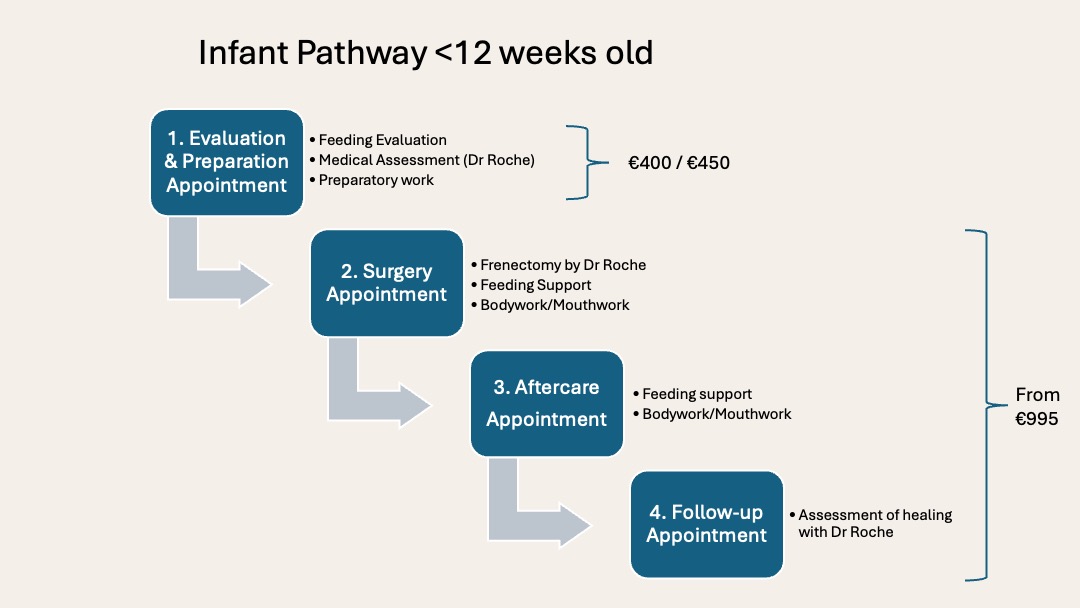
We do things differently at the National Tongue Tie Centre. We do not offer surgery at a first appointment - we believe thorough preparation before the procedure is what makes the difference between a procedure and a lasting result. Your baby's feeding, function, and whole-body tension are all part of the picture from day one.
Recognise your baby's symptoms?
Tongue tie in newborns and young infants most commonly presents through feeding difficulties - for both baby and mother. Select the symptom that best reflects your experience.
- Infant · FeedingBreastfeeding pain→
- Infant · FeedingPoor or shallow latch→
- Infant · FeedingNipple damage or pain→
- Infant · DigestionReflux, colic and wind→
- Infant · GrowthSlow weight gain→
- Unique Service · Ireland OnlyFrenuloplasty under conscious sedation→
Not sure which applies? View all symptoms by age group or book a free Concerns Call.
The pathway of integrated care
A baby with a tongue tie will have adapted to this structural restriction from before birth, developing compensatory feeding patterns that create tension throughout the body. You may have noticed your baby turns their head one way more than the other, or keeps their hands fisted frequently. These are signs of the whole-body compensation that accompanies restricted oral function.
Helping your baby transition to normal feeding patterns - using the muscles as they were intended and building stamina - takes time and guided support. We do not offer surgery at the first appointment because thorough preparation beforehand leads to significantly better outcomes. We want your baby to have the best oral function for the long term.
Feeding Assessment
One of our feeding specialists - an International Board Certified Lactation Consultant (IBCLC) - will assess how your baby is feeding (breast, bottle or combination). They will look at whether your baby is moving their tongue to create suction and extract milk, or whether they are using tongue or lip compression, tongue thrusting, or jaw dropping to achieve milk transfer. They will observe pacing, assess latch and position, and suggest changes to optimise feeding mechanics. If you are bottle feeding, they may advise on bottle type and flow rate.

Medical Consultation
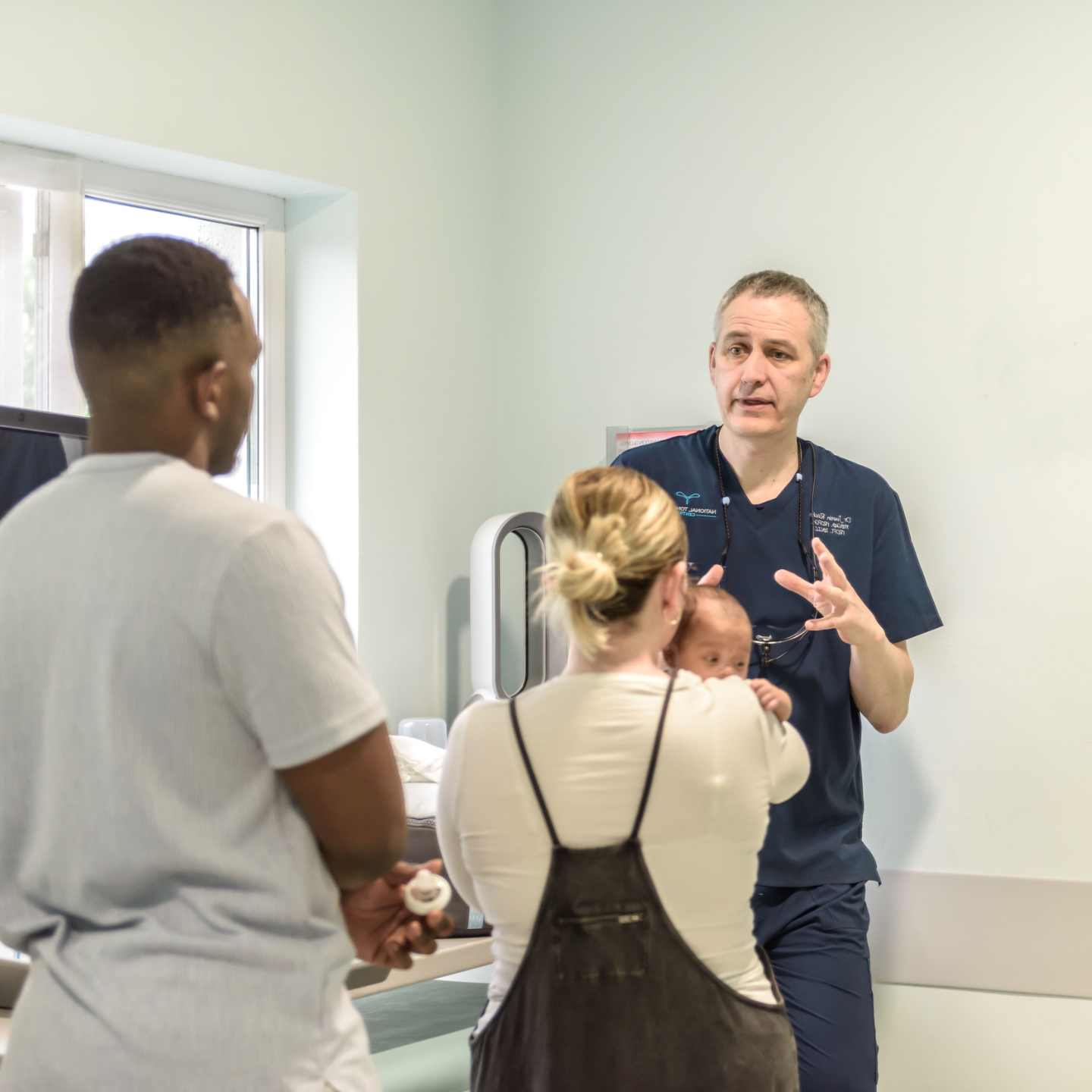
Dr. Justin Roche will examine your baby and discuss the findings of both the physical examination and the feeding assessment. A recommended treatment plan will be drawn up to prepare your baby for surgery, where this is indicated. This plan may include mouthwork to stimulate tongue movement, bodywork to reduce compensatory tension, and changes to feeding technique. Surgery will be scheduled for a separate appointment, allowing your baby time to work on new movement patterns and improve muscle tone in the mid-portion of the tongue.
Preparation and Bodywork
A member of our specialist team will teach you the mouthwork and bodywork exercises to carry out with your baby before surgery. Mouthwork is designed to stimulate specific tongue movements and build range of motion. Bodywork addresses the compensatory tension patterns in your baby's body - reducing jaw tension, improving body alignment, and building postural stability to support improved feeding mechanics. These exercises take only a few minutes a day and make a significant difference to your baby's readiness for the procedure and their recovery.

Frenectomy - CO₂ Laser Release
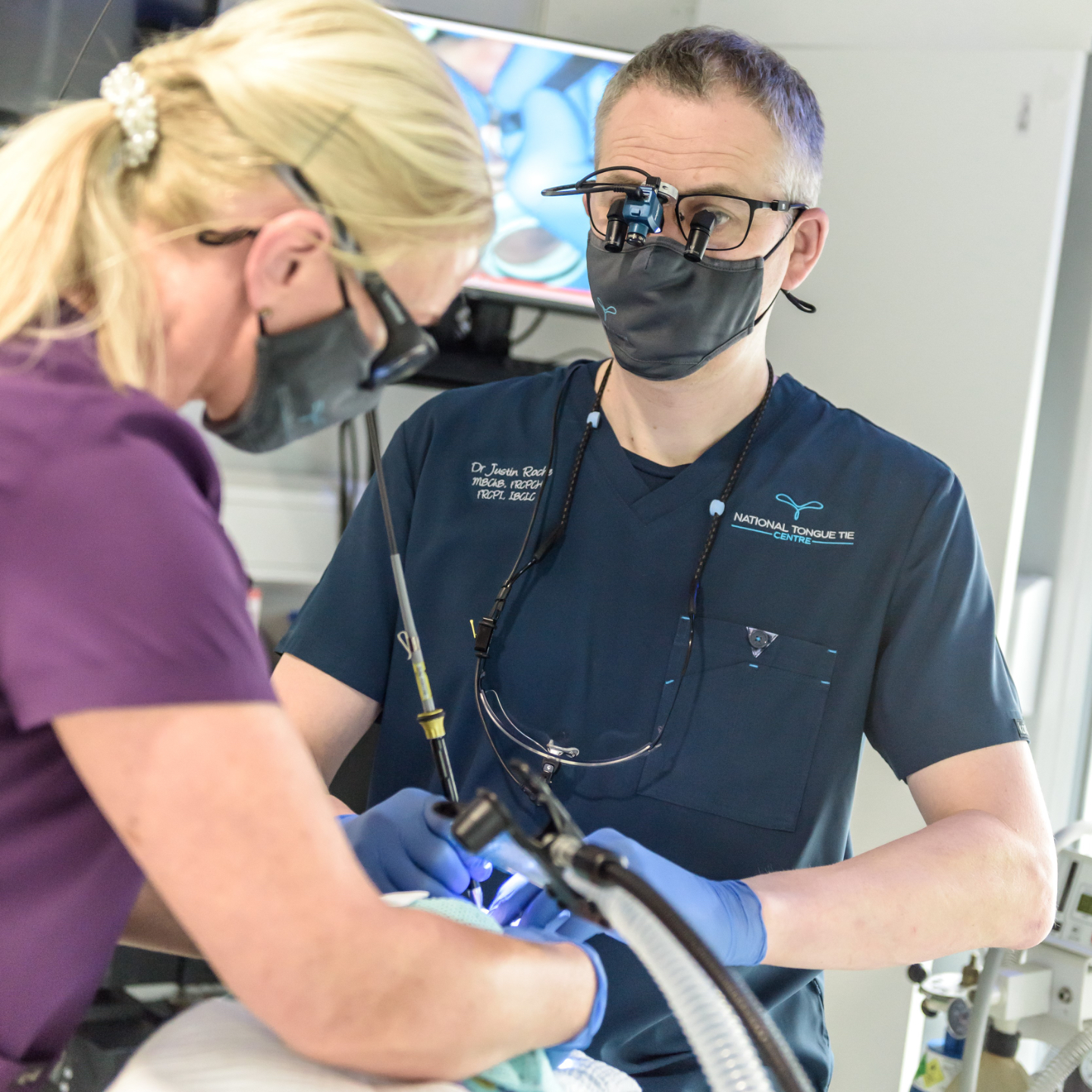
When your baby is ready, surgery is performed at a dedicated surgical appointment. You will first meet with Dr. Roche to discuss consent and answer any final questions. A healthcare assistant will then bring your baby to the procedure room - due to laser safety guidelines, parents remain in the consultation room during the procedure itself. Your baby will be swaddled and fitted with laser safety goggles. Local anaesthetic gel is applied to numb the area, and the tie or ties are released using a CO₂ laser. The procedure takes approximately 10 minutes, and your baby is settled and returned to you shortly afterwards.
With CO₂ laser, there is usually little to no bleeding. Rarely, a more significant bleed occurs due to an aberrant blood vessel near the frenulum - if so, this is controlled with one or two absorbable sutures. We do not use silver nitrate for bleeding control as this can cause a chemical burn. The greatest risk post-operatively is reattachment or sub-optimal healing, which is why our aftercare programme is in place.
Feeding after Surgery
Your baby can feed immediately after the procedure and we will assist you with this. If you are breastfeeding, an IBCLC will help you and reassess latch and position. If you are bottle feeding, we will review technique and advise on any adjustments. We will help you formulate a feeding plan for the days ahead through the recovery period.
To achieve the best result, we need to optimise healing of the surgical site while simultaneously changing how your baby sucks - teaching an optimal resting posture of the tongue, retraining normal movement patterns, and providing massage guidance to prevent reattachment of released tissues. A member of our team will go through all of this with you before you leave, including bodywork exercises, so that you are confident in the care you are providing at home.

Aftercare and Follow-up
You will be booked for an aftercare appointment in the days following the procedure. This involves feeding support, a check of the surgical site (Diamond check), and a review of the mouthwork and bodywork exercises you have been doing at home.
Dr. Roche will review your baby approximately six weeks post-operatively, checking the surgical site for height and elasticity of the healed tissues. If the healed tissue feels thick or tight, he may discuss the option of a steroid injection into the scar tissue to improve its suppleness. You are also welcome to request further feeding support or physiotherapy at this appointment, pre-bookable in advance.

Baby-led Diamond Care
Diamond care is the wound management protocol we recommend following a lingual frenectomy. Our team will demonstrate this technique with you at the surgical appointment, and our video guide is available below for reference at home.
Diamond Care Video Guide
Our video demonstrates how we recommend performing Diamond Care for your infant after a lingual frenectomy. Watch the video on our website or ask the team to go through it with you at your aftercare appointment.
Available on the National Tongue Tie Centre website and the Tongue Tie Toolbox platform.
Common questions from parents
If you don't find what you need here, our free Concerns Call is the best next step.
Why don't you offer surgery at the first appointment?
A baby with a tongue tie has been adapting to that restriction from before birth, developing compensatory movement patterns throughout the body. If we release the restriction without preparing the tongue and surrounding structures first, the compensatory patterns remain and outcomes are less predictable. Preparation - mouthwork, bodywork, and feeding support - builds the functional foundation that makes the procedure work. It is not a delay for its own sake; it is what produces better outcomes.
My baby is very young. Is it safe to wait for preparation before surgery?
This is an important question and we take it seriously. In cases where weight gain is significantly compromised or there is a clinical reason not to delay, we will discuss this with you and adjust the pathway accordingly. For most babies, a brief preparation period does not compromise outcomes and significantly improves them. We assess each baby individually and give you an honest recommendation.
My baby is bottle fed. Does that affect assessment or treatment?
No. We assess and treat both breastfed and bottle-fed infants. The functional assessment of tongue and lip movement is the same regardless of feeding method. If bottle feeding, we may advise on bottle type and flow rate as part of optimising your baby's feeding mechanics.
How long does the frenectomy procedure take?
The procedure itself takes less than 10 minutes. Your baby will be away from you for this time, during which they will be swaddled and cared for throughout, and returned to you settled. The full surgical appointment, including the consent discussion beforehand and feeding support afterwards, will take about the same time as your evaluation appointment - we will give you an accurate expectation of timing when scheduling.
Will there be much bleeding?
With CO₂ laser, there is usually little to no bleeding. Rarely, an aberrant blood vessel near the frenulum causes a more significant bleed - this is controlled with absorbable sutures. We do not use silver nitrate, which can cause a chemical burn. The greatest post-operative risk is reattachment or sub-optimal healing, which is why our aftercare programme and Diamond Care protocol are in place.
What is the Diamond check at the aftercare appointment?
After a CO₂ laser frenectomy, the wound heals by secondary intention, forming a diamond-shaped wound. The Diamond check at the aftercare appointment involves assessing this wound to confirm it is healing optimally, without signs of premature closure or reattachment. We also review your mouthwork and bodywork exercises at this visit.
Transparent fee structure
The initial evaluation is a standalone appointment - you are not committing to a procedure by attending. The findings and feeding advice from this appointment have clinical value regardless of whether you proceed to surgery.
Feeding assessment, medical consultation, and preparation guidance. No obligation to proceed to surgery.
Frenectomy, post-procedure feeding support, aftercare, and follow-up.
A payment plan is available. If you hold private health insurance, please see our fees page for information on what may be covered.
Ireland's original dedicated tongue tie clinic
Established in 2010 as Ireland's first clinic dedicated entirely to the assessment and treatment of tongue tie. Led by Dr. Justin Roche (Consultant Paediatrician, FRCPCH, FRCPI, IBCLC) and Kate Roche (Chartered Physiotherapist, IBCLC, Feeding Therapist). Clinics in Clonmel, Co. Tipperary and Kildare.
Ready to get answers for your baby?
If your baby is struggling to feed and you are not sure whether tongue tie is the cause, a specialist assessment will give you a clear clinical picture. We will tell you honestly what we find and what, if anything, we recommend.
Clinics in Clonmel, Co. Tipperary and Kildare. Patients seen from across Ireland and internationally.
Frenectomy is a surgical procedure. Risks, benefits, and individual expectations are discussed in full at assessment before any decision to proceed is made.